
Phonics at Bedtime: 10 CVC Mini-Games in Stories
Published November 14, 2025

Introduction
Turning bedtime into a playful yet educational moment can significantly boost your child's reading skills. By incorporating phonics through CVC (Consonant-Vowel-Consonant) mini-games into bedtime stories, you not only enhance their learning experience but also make it a fun part of their daily routine. Taleberry presents 10 imaginative mini-games designed to seamlessly fit into your bedtime storytelling.
Why Phonics at Bedtime?
Phonics is essential for developing reading skills, particularly in early learners. Integrating these lessons into bedtime stories can provide a quiet yet effective learning environment. It's a time when distractions are minimal, allowing children to focus on the sounds and patterns of the language.
10 CVC Mini-Games for Bedtime
1. Sound Hopping
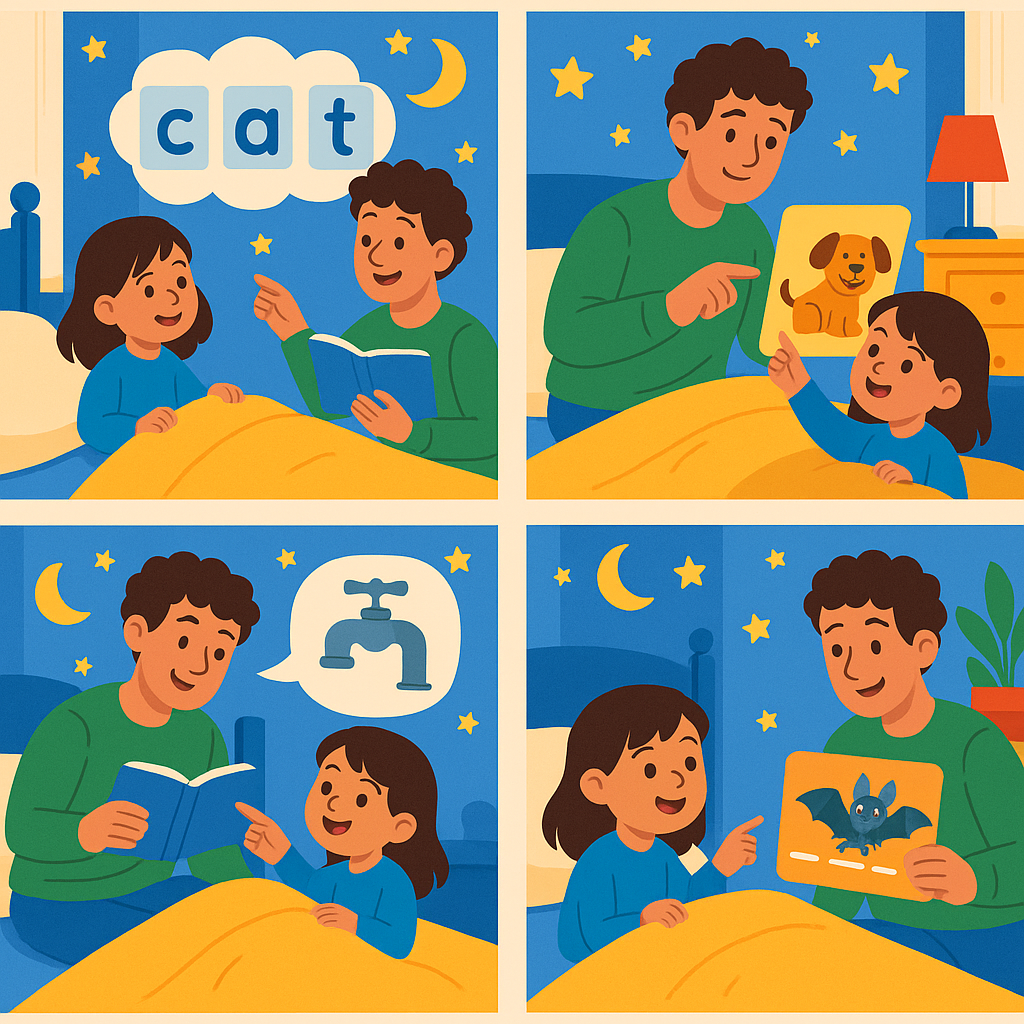
Create a story where characters hop from one sound to another. Encourage your child to identify the sound each character lands on.
2. Mystery Word
Introduce a 'mystery word' in the story and give clues through the narrative for your child to guess it by the end.
3. Sound Match
Include characters or objects in the story that start with the same sound and have your child identify these matches.
4. Rhyme Time
Construct rhymes within the story. Ask your child to find words that rhyme with key story elements.

5. Silent Reading
Pause at key moments and have your child read a word or sentence silently, then share what they read.
6. Story Spell
Spell out simple CVC words slowly as part of the story and have your child guess the word.
7. Whisper Words
Whisper certain words in the story and have your child repeat them loudly, emphasizing the sounds.
8. Word Builder
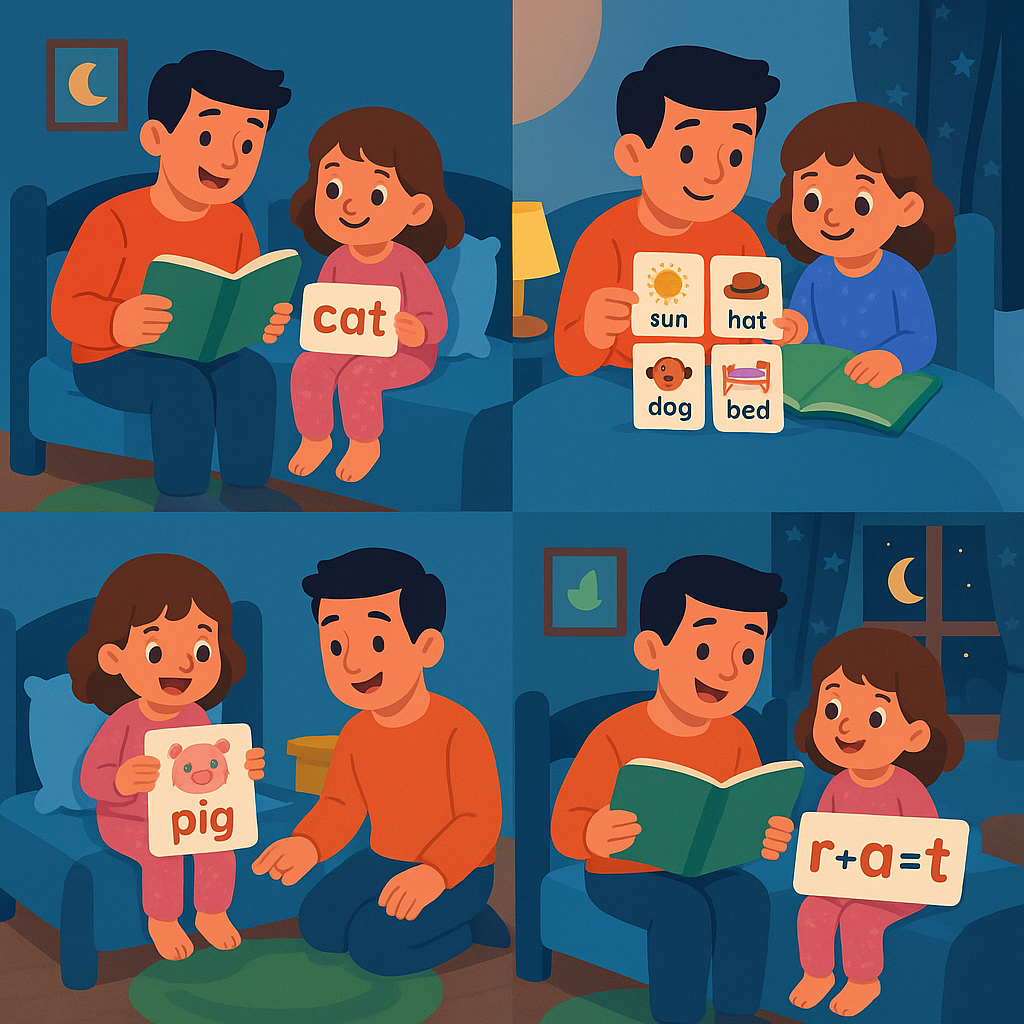
Break a word into sounds as you tell the story and have your child put the sounds together to form the word.

9. Echo Reading
Read a sentence and let your child echo it back to you, focusing on pronunciation and phonics.
10. Picture Prompt
Show your child a picture related to the story and ask them to identify words that describe it, focusing on CVC words.
Benefits of Bedtime Phonics Games
These mini-games not only enhance reading skills but also improve listening, comprehension, and cognitive abilities. They turn learning into a bonding activity, making phonics fun and engaging for both parent and child.
Conclusion
Integrating phonics into bedtime stories is a creative way to support your child's reading journey. With Taleberry's mini-games, you can make the most of this precious time, fostering a love for reading in a cozy, comfortable setting. Discover more at https://taleberry.app.